How It Works
OmniCloudMask achieves sensor-agnostic cloud and cloud shadow detection through two key innovations: dynamic Z-score normalization and mixed resolution training. These techniques enable a model trained solely on Sentinel-2 data to generalize across Landsat, PlanetScope, Maxar, and other sensors without requiring sensor-specific training data.
The Challenge
Deep learning models for remote sensing typically only work well on the same sensor, resolution, and processing level they were trained on. This creates a problem: every new sensor requires collecting new training data and training new models. OCM solves this by making the training approach itself sensor-agnostic.
Dynamic Z-score Normalization
Traditional deep learning normalizes inputs using statistics calculated from the entire training dataset. This works poorly across sensors because pixel value distributions vary dramatically between platforms and processing levels (L1C vs L2A, TOA vs surface reflectance).
Dynamic Z-score normalization instead normalizes each input patch independently:
Calculate mean and standard deviation from each patch
Normalize each channel to zero mean and unit standard deviation
Apply this per-patch, per-channel normalization at both training and inference
This is analogous to applying a local histogram stretch when zooming into a scene in GIS software. The result is that imagery from any sensor gets normalized to a common representation, regardless of its original value range.
# Conceptually, for each patch and channel:
normalized = (patch - patch.mean()) / patch.std()
This approach works because for cloud detection, image texture and spatial relationships matter more than absolute pixel values. Clouds look like clouds regardless of whether pixel values range from 0-10000 or 0-1.
A practical benefit: your input data can be raw values or pre-normalized. If you’ve already normalized imagery for another model, OCM will still work correctly since it re-normalizes each patch independently.
Mixed Resolution Training
To handle different sensor resolutions (10m Sentinel-2, 30m Landsat, 3m PlanetScope), OCM uses mixed resolution training:
Training data is randomly resampled to resolutions between 9m and 50m during training
This teaches the model to recognize clouds and shadows across different spatial scales
Higher resolution imagery (like 3m PlanetScope) is resampled to 10m for inference
This approach not only enables cross-sensor generalization but actually improves accuracy on the native training resolution by acting as a data augmentation technique.
Recent model versions (V3 and later) were additionally trained on Sentinel-2 imagery super-resolved to 2×, extending the supported range down to 5 m. Note that 5 m is no more accurate than 10 m — it simply widens the range of imagery the model accepts. See Choosing a Resolution for guidance on selecting an inference resolution for your data.
Why These Techniques Matter
The techniques used in OCM are not specific to cloud masking. They represent a general approach for training sensor-agnostic remote sensing models:
Dynamic Z-score normalization decouples the model from sensor-specific pixel value distributions
Mixed resolution training decouples the model from a fixed spatial resolution
We suggest that other remote sensing deep learning models could benefit from similar training approaches, potentially reducing the need for sensor-specific datasets and enabling broader applicability of trained models.
Training Data
OmniCloudMask is trained on Sentinel-2 imagery from multiple datasets:
CloudSEN12 - The primary training dataset, containing expert-labeled cloud masks for Sentinel-2 scenes globally. Includes “high quality”, “scribble”, and “2k” label subsets.
KappaSet - Additional training data used in model versions 3.0+.
OCM Hard Negatives - Curated challenging scenes to improve edge cases.
The training data covers diverse geographic regions, cloud types, and atmospheric conditions. You can explore the spatial distribution of training samples on the Training Data Distribution Map.
See the model changelog for which datasets were used in each model version.
Architecture
OCM uses an ensemble of two U-Net models with soft voting to combine predictions. The ensemble improves both accuracy and generalization compared to single models.
The model architecture has evolved over time, with each version improving both accuracy and inference throughput. See the model changelog for details on architecture changes between versions.
For full methodology details, see the OmniCloudMask paper.
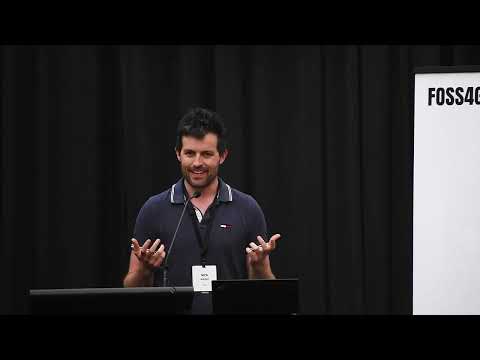
Video Explanation